A world is waiting for you in te reo

Kaitohutohu Ahumahi at MPTT has been taking on Te Reo Māori
Te Wiki o te Reo Māori 2023 kicks off Monday, September 11, with the theme Kia Kaha Te Reo Māori – making the language stronger. It’s all about giving it a go, because together, we can make the language stronger. Te wiki is an opportunity to introduce yourself to te reo or to try out some new words, knowing that your efforts will be praised and respected. It’s also a chance to celebrate the fact that we add te reo in our lives with a sense of pride. Wherever you’re at with te reo, building your knowledge means taking one small step at a time. You just never know how far or where such a journey it will take you.

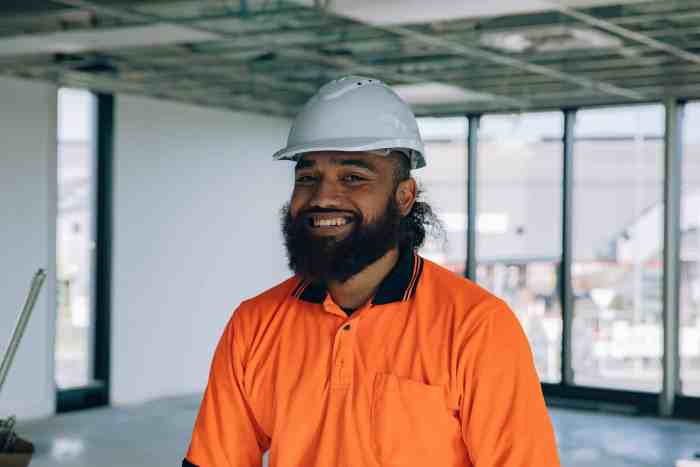
David Parsons, Kaitohutohu Ahumahi at MPTT has found that setting out to learn te reo has opened up worlds beyond his imagination. He says now is better than ever before for people to embrace the language and encourages others to take the step.

“Te reo Māori is connected to my whakapapa. However, it was totally missing in my upbringing until my late teens. Then, I saw my mother promote and support reo Māori in business and kura. And now, at last, we’re recognised and rewarded for exploring our tikanga, whakapapa and language.”

“I’ve always been passionate about extending my knowledge and learning. In my roles at MPTT and BCITO, learning te reo is vital, and I’m being supported like never before. The timing is so right. Finally, I have all these options in front of me.”


Changing the way we work

David says learning whakapapa and tikanga is as important and is a part of learning the language. This has already changed the way he goes about his work. 

“I noticed the difference of being in a business meeting that follows tikanga. And I had the opportunity in my current company to take on different roles. Such as Pou tangata and now Kaitohutohu Ahumahi (Industry Advisor) here at MPTT. 


A worthy challenge

David says learning te reo has challenged him, but it’s all worth it. 

“It can feel awkward, and sometimes it feels like it’s not getting in.” 

“I need to work on my pronunciation – my vowels. But it opens up new worlds and reasoning that you might otherwise never have been aware of.”

Learning the bigger and deeper concept of words has brought understanding for David that he says is precious.

“Apprentices call me Matua, and now I get it. It gives you a different perspective.”

Three words in particular have a new, deeper place in David’s heart: Tikanga, whanaungatanga and whakapapa. A literal English translation can never really capture what these concepts mean. 

David says his kaiako Novi at Hoani Waititi Marae has played a big role in mentoring and inspiring him. He says one of his sayings has stuck with him. 

You can be the sheep and watch, or be the shepherd and lead.” 

“It’s up to you whether you step up.” 

He knows all MPTT trainees will understand this advice, and he’s pleased to share more encouragement.


Top tips in learning te reo

Here are David’s top three tips for MPTT trainees and anyone ready to explore te reo.

  • Every day is a chance to improve and be better. 
  • Find the right teacher for you – even if you need to try a few, don’t give up.
  • Most importantly, never lose sight of where you’ve come from. 

And here are a few simple phrases to get you started.

Aroha mai!Sorry / excuse me!
Ngā mihi nuiThanks so much
Ka raweHow are you?
E hoaFriend/mate
Kei te pēhea koe?That’s awesome
Kei te paiI’m good
ĀeYes
KāoNo
Haere rāGoodbye (speaker is staying)
E noho rāGoodbye (speaker is leaving)
Mā te wāBye for now / see you later
Kia pai te rāHave a good day

Oceania Careers Academy celebrates heritage and futures

Oceania Careers Academy — OCA —  is on a mission to see more young Pacific people in sustained, higher-paid employment with skills sought after by industry. And it has a unique way of delivering this. OCA is run by Pasifika for Pasifika, so it connects with learners in a style that truly resonates. It means OCA trainees love learning about the trades and setting themselves up for the future, even when they face challenges along the way.  

Care and culture change everything

OCA specialises in training people for the construction industry because they see this as a way to grow prosperity in Pasifika families. They put family and Pasifika values at the heart of everything and wrap around each learner with the support they need.

Tony Atina, Campus Director, says one of the reasons he came to work at OCA is because of the pastoral support. Tony is of Samoan descent and was born and raised in Auckland. He worked in industry as a builder for 17 years, with his own business for 10 years. He has also worked extensively in training development. He says OCA’s approach is very different to what he’s come across before.

“I’ve seen the pastoral support label used elsewhere, but it can mean different things. At OCA, it starts with the family – family involvement – whānau ora assistance; it’s about the whole whānau.”

Our Navigators and tutors give both emotional and practical support. It’s vital we reduce barriers and impediments to our people succeeding, and transport is one of them. Getting to the course can be hard.

“Our Navigators provide transport solutions eg: sort out Hop cards and even leave a couple of hours early in the morning to collect students. Each day they’re out on the road to help people get to their courses. The chats that they have in the van can be quite personal, and that’s important.”

Salesi Vea is studying Level 3 Carpentry at OCA through an MPTT scholarship and is grateful for the support.

He says, “I had a rough patch of my life. I surrounded myself with the wrong people. I got a second chance with OCA. Over time I’ve come to like it – I love it here. The stuff that the tutors do for us is absolutely over the top.

You just know it’s a family; it’s not just a random group of people learning things individually; we are all here as a team and helping each other.”


Flexibility helps overcome barriers

Helping Pasifika students manage their commitments and overcome barriers to studies is top of mind at OCA. Along with pastoral care, they also ensure flexibility in the programme. Tony explains, 

“Not all students can attend a course every day – childcare, shift work etc., can make it difficult. For us, it’s about allowing flexibility but being mindful that there is a programme to complete.”

“Blended learning means people can work but cross reference what they’re doing back into the programme – so if they’re covering things in their work, it can contribute to practical exercises. Tutors can come on-site to do learning assessments. The additional option is that learners can come after hours to do catch-ups.”

Similarly, the tutors ensure that they deliver content and learning so that it’s easy to understand and engages people.

Folototo Peni Motunuu has come from Samoa to complete her Level 3 in Carpentry. She says, “I really enjoyed learning how to make a chair and a toolbox.”

Folototo said she’s grateful for all the help her tutors have given her, and she’s found friends there who support her too.

Praetorian Parkinson, Ngāti Paoa and Ngāpuhi, is also completing his pre-trades Level 3 in Carpentry at Oceania Career Academy and says the teaching style makes a difference.

“I like the way they don’t just bark orders. If you don’t understand something, you can just ask for clarification. You don’t have to sit there and try to figure it out yourself only to fail and have to do it all over again.”


Cultural values lead

As well as going the extra mile for its ākonga, OCA embeds Māori and Pasifika traditions and values.

Tony explains, “We start each day with a prayer and a toolbox meeting. This sets the scene for the day, and it carries into the classroom. We also have mentors around to welcome people and check in where they need it.

“Sometimes people have things going on in their lives before they reach the course in the morning, and this way, someone is there to help them with anything they may need.”

Prae says this care makes a huge difference.

They care about your culture, Māori, or Pasifika. They want to help you and push you through to where you want to be in life.”

Praetorian Parkinson

Salesi says that along with the main trades content, they have lots of opportunities to develop their values and understand their place in the world.

“On Wednesdays, we have the navigation programme. We just started a new leadership piece, which is about self-leadership and what it takes to become a leader on and off the worksite.”


The stats show success

The power of nurturing culture shows as OCA graduates flourish. Since 2015, more than 300 students have successfully completed OCA programmes, and of those, 71% are now working in the industry, and 17% have gone on to higher-level studies.

Harris Laulu, who is a proud Samoan is also studying Level 3 Carpentry. He says it’s about making the most of what OCA offers. “My advice is to make the most of the support.

If you’re studying on the MPTT scholarship, take all the help you can get because it’s coming from people that really want to help you – genuinely.

Salesi agrees and is excited about his future. “If everything goes to plan, I see myself running my own job site”.

“If you’re really driven, just go for it. Take that opportunity.”


Graduation is another step forward

OCA is setting its students up to thrive. Once they complete their pre-trades, their stories are o only just getting started. Finding apprenticeships unlocks a whole new realm of possibilities.

When trainees graduate, there’s a huge flow on effect. MPTT ensures they have a tool kit, making the transition to employment easier. And when they get into work and become qualified, the real change happens. They can contribute to their families and society. They learn how to become self-employed businesspeople; they build financial literacy and capability,” explains Tony. He’s proud that OCA empowers them to do this.

Tony is excited about how OCA is responding to the changing working environment while also keeping its unique and powerful mix of support for learners.

“We’re ensuring that the organisation continuously evolves its approach while retaining the values of what we have. Our training keeps work-based learning at its heart, and we make good changes that are relevant to industry so they can gain relevant skills that they’ll need.

Harris sums up, “By learning the trades, you get to feel free because it’s going to be a good future, and you can use your skills to help other people.”

Empowering Māori and Pasifika Women Through Trades Training: Bridging the Pay Gap

Wāhine who get qualified in trades are not only building themselves a future; they’re also helping to bridge the pay gap for all women, Māori and Pasifika. They’re paving the way for their sisters – and brothers – to unlock higher-paying careers with mana and dignity.

It’s disappointing that a pay gap persists. Fair-minded organisations are sick of the lack of progress and recently sent an open letter to the government requesting more action.

The Pacific Pay Gap Inquiry Report compared earnings for pakeha men with those of others. It found that for every dollar a Pākehā man made in 2021:

  • Pākehā women earned 89 cents
  • Māori men earned 86 cents
  • Māori women earned 81 cents
  • Pasifika men earned 81 cents
  • Pasifika women earned just 75 cents.

Sam Sefuiva, MPTT Mana Whakahare/Project Manager

This gap means people are not only missing out on crucial wages, but opportunities to fulfil their potential and make meaningful choices about their lives.

The report also looked for the reasons. Racism, unconscious bias and discrimination are holding back women and Māori and Pasifika workers from realising their full potential.

Sam Sefuiva, MPTT Project Manager, says that MPTT Auckland is helping Māori and Pasifika succeed in the trades while creating social change.


The solution: Trades training for higher-paying careers

“We’re here to give Māori and Pasifika trainees practical support to build their careers. We offer free fees, a tools kete including life and work readiness skills, and help to find work.”

Women can take a hammer to the industry’s glass ceiling by learning trade skills. It’s a pathway to earn while you learn, do hands-on work that keeps you fit and have skills that are in demand by employers. Sam says,

“By closing this pay gap, we can ensure everyone in our communities has the opportunity to thrive, and those families on the lowest wages can break from the constraints of poverty.”

Qualified tradespeople can enjoy secure, well-paid work. With the shortage of qualified tradespeople in Aotearoa, there’ll be even more jobs to choose from in future.

Trades projects are usually a team effort, so your skills could lead to a variety of roles. Many tradespeople also become managers or start their own kaipakihi (business).


It’s crucial to become qualified

Qualification can help you break through barriers to better pay.

The Pay Gap report showed many people were paid little more than minimum wage despite years of getting skills in the same job. It also showed the pay limits of staying a contractor, casual worker, or seasonal worker without security.

MPTT supports our trainees into apprenticeships because it’s game-changing. As an apprentice, you’ll be paid to work towards your qualification. That means you’ll do practical assessments at work, which your boss will sign off on to say you’ve successfully learned those skills. You’ll also do some off-job training to learn more about the theory behind your trade.

Once you’ve finished your apprenticeship, you’ll be fully qualified in your trade.

Toni, an apprentice and young mum is an outstanding example. Eddie Green, who oversees Toni’s work at Pacific Steel, says she will be “fighting off job offers” once she’s certified.


We’ve got your back while you close the gap

MPTT Navigators guide trainees through their training and beyond, helping them to find their voice and place at work. They encourage them to aim high and continually develop their skills.

Makahn Warren-Chapman, MPTT Navigator

MPTT Navigator Makahn says she and her team consider the whole journey so they can give the right support at the right time.

Navigators support ākonga to identify anything that might stand in the way of their progress so they can help them make a plan to get past any obstacles. This includes things such as getting a driver’s licence and arranging childcare.

“One of the things we have identified is that people might not know how to write an effective CV, so we’ve developed a workshop that can assist with this. We also offer workshops about how to manage job interviews,” says Navigator Makahn Warren-Chapman.

MPTT also partners with training and industry organisations that value their Māori and Pasifika workers and advocate for them.

The open letter on Pay Gaps says, Supporting employers to do the right thing and to be transparent about their pay gap is a good first step.


Be part of the change

Since we started in 2015, MPTT has helped more than 4,195 trainees learn a trade, and 42% (as of the end of 2022) of our graduates are now in apprenticeships, trades-related employment or further study.

Working together, we can build a future where everyone, whatever their ethnicity or gender, is paid fairly for their work and treated with respect and dignity.

Not only is this the right thing to do, but it will ensure Aotearoa New Zealand is honouring te Tiriti o Waitangi and meeting its human rights obligations. It will also bring us in line with other progressive countries already moving towards closing their pay gaps.

If you’d like to learn more about how an MPTT scholarship can unlock your future, we’d love to hear from you. And similarly, if you’re an employer who cares about building a fairer Aotearoa for your team and community, get in touch.

Electricians Amped for the Future

Matty and Percy have set themselves up for bright futures by training as electricians. They say that the mix of theory and on-the-job learning is both challenging and satisfying. But learning from those experienced in the industry is teaching them valuable tips. The pair are already able to help out their whānau with their new skills.

MPTT helped the two take up trades training

Percy King, Te Arawa, knew he’d need something to fall back on when his professional sporting career came to an end. Being an electrician was the trade that had always appealed most to him. Getting a scholarship through Māori and Pasifika Trades Training helped seal the deal.

“Although an electrician’s apprenticeship is one of the harder ones, it’s worth it for me,” he says.

“I’ll be the first sparky in the family and in the community. So a lot of my family that have homes can call me so they can get stuff done such as power outages.”

Percy King, electrical apprentice

Matty also wanted to get into a trade somehow, and he heard about MPTT’s support for Māori and Pasifika learners. A scholarship covered his fees, and when he started studying his pre-trade, he realised electrical work was something he was genuinely interested in.

“It was a one-year pre-trade course at Manukau Institute of Technology: Electrical Engineering Theory Level 3. The benefit is that you do a lot of the theory upfront, so when you get into your apprenticeship you start further ahead.”


Help starting in work

When they completed their study, MPTT helped them get ready to earn. MPTT offers workshops and skills for things like job searches and cover letters. These graduates have both found great apprenticeships to start as soon as they finished their pre-trade course.  Percy is working with JB Electrical and Matty with Laser Electrical.

“MPTT gave me a tools grant, so I had what I needed to get started. It made such a difference right away – especially having my own set of power tools to take to the job,” explains Percy.


Putting theory into practice was powerful

Both Percy and Matty found that taking up the tools allowed them to connect everything they’d learned. But there are plenty of tricks they’re learning from the more experienced tradies.

Percy, who is in his second year with MB Electrical says even things that seemed quite straightforward make so much more sense on the job. “Knowing about testing and fault finding… it’s just so important. And it’s worth perfecting the basics early such as stripping cable and running cable.

He says he’s had good advice from mentors in his apprenticeship.

“I was told, don’t worry about speed at the start; the main thing is getting it right. I’d rather you be slow and right than fast and wrong. Don’t feel pressured to rush.”


Matty agrees. And he’s found that in his apprenticeship with Laser Electrical, you never stop learning.

“When you start, you can think a certain way, but if you’re open-minded, willing to learn and just take stuff on board you can build your skills a lot faster.

“The experienced ones have always got some way to sort things. If there’s any problem, they can show you a technique new technique or trick.”

Once Matty and Percy complete their apprenticeships, they’ll be fully qualified by ETCO and can eventually set up their own businesses. But both are keen to spend the next few years learning and getting experience with different types of work.

“What I’m doing at the moment is new builds, which are quite straightforward. You’re pretty much just making holes in the house frames and then running out cables. When you go to like houses that already built, and you need to start with fault-finding, it’s a different story,” says Matty.

I’m looking to jump to more maintenance work now for a bit of that experience, and then I’d also like to do a commercial project for that experience.

I feel like you need to be able to come across anything and be confident that you can kind of deal with it.”

As well as being excited about their career prospects, these apprentices value the sense of purpose and value. They say MPTT has played a big part in this.

When we started at MIT, Makahn Warren-Chapman, an MPTT navigator introduced herself. There was a waananga where we talked about belonging and how a trade would enable us to give back to our communities and whānau, explains Percy.


The two recommend their profession to others and have some practical advice.

Percy says, “If you’re doing a pre-trade for three days a week, spend your other days looking for work rather than having a four-day weekend. If you’re working while you study, you get to apply what you’re learning immediately and put it into context.

Matty says, “Being like there’s a lot of people in this industry that have a lot of experience; it’s great to learn from them.”

No images of Matty were available at the time of publishing.

David Parsons – MPTT Kaitohutohu Ahumahi

David Parsons — MPTT Kaitohutohu Ahumahi
David Parsons is of Ngāpuhi decent, his marae is Taheke, he whakapapa’s to the Pou whānau. At MPTT he is our Kaitohutohu Ahumahi.
David has almost 20 years of experience with the BCITO (Building and Construction Training Organisation) helping people navigate the trades. He is delighted to join the MPTT project team so that he can give back to the sector he loves and help support Māori and Pasifika into trades.

David’s role is as an industry connector. He’ll be supporting tauira, providers, and employers to ensure strong, smooth progressions from pre-trades training to apprenticeships and beyond. 

He’ll help MPTT tauira take their next step once they have completed their pre-trade course with their navigators who together will help them find employment and an apprenticeship.

His long experience in the industry means he’s seen how much success spreads when trainees commit to the trades.

“Those who stay the distance to get qualified become sought after successful employers who inspire others to join the trades. This tuakana teina relationship is special to Māori and Pasifika and is immensely powerful.”

David acknowledges that it can be a challenge to persevere and get qualified, but he says the long-term gains are worth it.

David is here to help anyone who wants support seeing their apprenticeship or apprentice all the way through.

David also wants to encourage more Māori to step forward and put themselves out there. By doing so they can receive the support they need to succeed in the trades. “It’s about making things better for Māori and Pasifika,” he says. With David on the team, we’re sure to do more of that than ever.


Tue le Vā: Supporting Māori and Pasifika employees to thrive

When your team has a sense of wellbeing at work, they’re more likely to have higher motivation and effectiveness, and that affects your bottom line. Understanding how to support your Māori and Pasifika staff can help everyone be at their best.

Māori and Pasifika have specific needs – some of which differ from the rest of New Zealand. And in Auckland, we have one of the largest Polynesian populations in the world.

Our Pasifika community includes at least 13 distinct languages and cultural groups. Pacific people are linked with tangata whenua and embrace the bi-cultural foundation of Aotearoa. However, this doesn’t mean ignoring subtle differences among people. In fact, personalisation and cultural understanding are key.


What do our Māori and Pasifika employees need?

Skills.org regularly surveys its network to understand wellbeing at work. Their team has found that efforts to be culturally inclusive often fall short.

“In improving wellbeing, building ‘genuine care’ should be a key focus area for both Māori and Pasifika,” they say.

However, Skills found that Māori place more importance on a good work-life balance, a culture that looks after employee wellbeing and policies that look after staff wellbeing.

On the other hand, priorities for Pasifika are a job that makes them feel worthwhile, a good work-life balance and opportunities for training and development.

To fully support those with Māori or Pasifika backgrounds means embracing what they bring as a whole person. Practical steps can help you welcome new team members and improve performance. In turn, you’ll strengthen your business’s resilience through talent.


How can employers support Māori and Pasifika staff?

One of the most impactful ways to strengthen cultural support in your business is to provide new employees with role models, support and mentors of the same ethnicity. This can be especially important in the context of your business’s own cultural norms. Pairing someone with an experienced buddy from the same culture means they have someone who can empathise and who gets them.

Whānau plays an important role in the lives of Māori and Pasifika people. Pasifika parents often make decisions about their children’s careers, so it’s worth making and taking opportunities to engage with families. People need to know what to expect from an apprenticeship so they can set up the right support.

Competenz is another of our training partners who research and develop strategies to better support Māori and Pasifika. They gather insights from industry and the community.

“Pasifika people are proud. Many don’t ask questions because they don’t want to be seen to be failing. Many Māori learners are quite reserved. Getting to know them personally is the best way to encourage them to open up with questions.”

Teu le vā, ‘nurture the relationship’ is a common expression in Polynesian culture. Vā is the space between, not empty space but the sacred betweenness. The saying acknowledges the importance of mutual trust, respect and maintaining each person’s integrity. Putting this at the heart of your relationships with Pasifika is vital. For example, make sure you have a process so that names are pronounced correctly. Listen when your team talks about their obligations outside of work.


What’s the opportunity?

E vave taunu’u le malaga pe a tatou alo va’a fa’atasi.
Our journey makers will arrive at our destination faster if we paddle our va’a/waka together.

Our Māori and Pasifika workers are an untapped source of talent and leadership. Competenz’s research found that Māori and Pasifika still have lower rates of enrolment in workplace trades training than other ethnicities. However, Māori and Pasifika learners complete their qualifications at the same rate as learners of other ethnicities. It means we’re missing out.

Welcoming more Māori and Pasifika into trades is one of the best opportunities we have to build a skilled and productive workforce in our industries and nation.

Employing people from varied backgrounds means you benefit from their different perspectives and problem-solving approaches. Plus, you’ll be helping create social change through a more diverse workforce. Having a team that reflects this shows you value your community’s diversity as customers too.

If your organisation would like to learn more about cultural competency, then we’re here to help.

Please register your interest with us now for a workshop evening, free for MPTT employers. 

Beyond apprenticeships

Advancing your career as an MPTT Alumni
Getting qualified in the trades is a path to a secure and satisfying career, and it can also be a stepping stone to even further advancement. Whatever your trade, there are plenty of opportunities once you’ve completed your apprenticeship. Whether it’s getting recognition as a master of your field or learning to supervise and manage, the opportunities are as far-reaching as your imagination.

Once you’re qualified, out working and ready to advance in your industry, you can level up with a Certificate in Business Skills First Line Management. It’s suitable for current or aspiring managers or supervisors in a range of industries, including Automotive, Transport & Logistics, Drilling, Mining & Quarrying and Gas, Hospitality, Engineering, Fabrication and more.

Below, we’ve listed more of the exciting advancement opportunities for taking your career to the next level, becoming a manager or even your own boss.


Big steps to becoming the boss in your trade

Automotive

Jodi Franklin from MITO says completing your apprenticeship is just the beginning. Graduates can go on to specialise in advanced fields of work with qualifications such as Electric Vehicle Level 5 or the new suite of Level 5 automotive programmes in Light, Heavy Vehicle, and automotive Electrical (being released in 2023).  If you’re interested in leadership, the New Zealand Certificate in Business can be a pathway to a management position or increase your skills and knowledge.

“We actually have scholarships advertised now that include Māori and Pasifika categories, so it’s a great time for people to consider what they would like to do next.” 

You can see the list of scholarships here: www.mito.org.nz/get-qualified/2023-scholarships/


Building and Construction

In the construction industry, there are also training opportunities to give you the skills to become a supervisor. 

David Parsons of BCITO says the Level 5 Certificate in Construction Trades — Supervisor recognises your ability to manage people and job sites, tender for new work, decision-making and much more. There are many opportunities to own your own business in construction when you equip yourself with the right knowledge, practical abilities and people skills. 

Licenced Building Practitioner

The Licensed Building Practitioner (LBP) scheme requires building practitioners to be licensed to carry out or supervise work that is critical to the integrity of the building. This kind of ‘restricted building work’ concerns homes and small to medium-sized buildings. Gaining your LBP Licence means you can carry out more complex work, including:

  • active fire safety systems
  • brick & block laying
  • cladding
  • foundations
  • framing
  • roofing.

Being qualified is an important component of getting licensed to practise. To find out more about licensing, refer to Licensed Building Practitioners.


Electrical

Once you have completed your electrical apprenticeship, you can look ahead to the National Certificate in Electrical Engineering (Advanced Trade) L5. This programme is ideal if you’re a registered electrician looking for an advanced qualification to develop your electrical, business and overall leadership skills.

ETCO offers the Master Electricians Competency Course for registration or renewal of a practising licence for electricians, electrical apprentices and electrical workers. It covers updates and changes to electrical legislation, supervising trainees, first aid and much more. Find out more at ETCO.


Hairdressing

Once you’ve completed your hairdressing apprenticeship, advanced cutting and colouring training allows you to take the next step. With the advanced colouring course, you are able to work as an advanced professional hair colourist within a commercial hairdressing salon or as a self-employed stylist in a variety of settings.

Advanced cutting training equips qualified hairdressers to provide specialist cutting services and advanced techniques. These qualifications will set you up for operating with complete self-management when cutting hair. To find out more, visit HITO.


Hospitality

In hospitality, great managers aren’t born; they’re trained on the job. Some of the courses that can help you do this are the Team Lead Savvy Award – Level 3, New Zealand Certificate in Business (Introduction to Team Leadership) and the New Zealand Diploma in Hospitality Management – Level 5. 

Each of these qualifications will help you upskill with the knowledge and capability to be able to manage the premises’ day-to-day operations, staff and planning and pull everything together to provide first-class customer service. Find out more at: www.serviceiq.org.nz/training/management-and-supervision-programmes/


Painting and Decorating

All qualified paint apprentices can apply to attend a sponsored Master’s Course. This will teach you about running a painting business, including costing, measuring, staff management, employment relations and health and safety.

You’ll learn about:

  • present and future trends in the paint industry
  • the role of the architect within the industry
  • industrial relations, employment obligations
  • management of a painting contracting unit
  • colour and its use within the industry.

Gaining experience running small to progressively larger projects within an established company and this learning will help you if you wish to start your own painting business.

Find out more at Master Painters.


Plumbing and Gas fitting

Qualified plumbing apprentices have opportunities to advance their careers with both the First Line Management qualifications and with specific industry training through Master Plumbers. Examples of topics included are Contract Law and Dealing with Consumers.

To become a Master Plumber, you need the highest qualification available and are responsible for making sure the company’s work is done competently. All Master Plumbers members have a certifying tradesperson on the team and undertake quality assurance reviews of their business practices.

Find out more at Master Plumbers.

Drive to qualify delivers awesome automotive careers

Romeet Chand and Jason Pou are pursuing their passion with careers in different parts of the automotive industry. Jason has completed his Light Automotive Engineering qualification at Mercedes-Benz Auckland, and Romeet has completed his Heavy Road Transport qualification at Truckstops. Both of these MPTT scholars are turbo-charging their futures and making the most of support along the way.

The two have always loved cars, and they said training to enter the industry made sense.

Jason said he reached a point in his life where he wanted to have a skill to back him up, so he decided to become qualified in a trade. MPTT supported him with funding, and when he was ready to find employment, a Navigator helped him secure his first interview. He was eventually offered a role with Mercedes, an opportunity not to pass by.

Romeet has had a lifelong drive to find a career in the automotive field. He grew up in West Auckland and has been around cars and engines since he was small. He studied Level 2 and 3 Automotive Engineering at MIT as well as Welding and Fabrication at Level 3 and has now completed his apprenticeship. He first secured a position at Truckstop through MPTT partner and industry training organisation MITO. Romeet is enthusiastic about the support he received from MITO.

Romeet explains, “MITO does heavy-duty diesel apprenticeships. They provide the training materials via eLearning and come in and see us regularly to assess where we’re at and make sure we have credits, and goals so we are on track to get qualified. 

“My advisor, Brad, kept us to deadlines and made sure we got things done on time and made getting my qualification so much easier.” 

Brad Hepi says helping apprentices is an important part of his role at MITO. “We work alongside MPTT in identifying young people that want a career in the automotive industry. With MPTT, we support our Māori and Pasifika, providing an extra layer of care and support. We give theoretical and technical support as well as help to guide people throughout the apprenticeship journey.

Jason Pou completed his apprenticeship in April 2022.

No idling

Although Romeet and Jason both brought a lot of knowledge, there’s been no time to idle. The learning is at a fast pace.

Jason says he was surprised at how much he has learned in completing his apprenticeship. “I started my pre-trades a bit later in life, and I thought I knew a lot. But then I kind of had to eat a humble sandwich pretty early.” 

Nevertheless, he completed his qualification in April 2022, despite the disruption of the pandemic.

Advisor Brad says the ability to go at your own pace is an advantage of the automotive apprenticeship programme.

“Automotive apprenticeships are unlike some others where it’s time-based. Instead, if you’re disciplined, you can get through it more quickly.

“We allow three or four years for a normal apprenticeship. But that becomes shorter if you’re academic enough, understand everything practically and are good with your hands. Both Romeet and Jason qualified way ahead of their estimated completion dates.”

Romeet, who qualified in April, says an important part of completing the apprenticeship was to get experience across all the areas of the trade.

“For example, if I needed to do something with a turbo, I had to wait until a truck with a turbo failure came in. But it works out by keeping in touch with your foreman about what sort of jobs you want to work on.

“Also, MITO is able to help by putting us on block courses for a few days to do certain things that may not otherwise come up regularly.

“There is a lot of support and lots of people who can help you out.”

The apprenticeship itself is about rolling your sleeves up and getting your hands dirty – but not as dirty as you might think.

Brad says the industry has changed a lot and is not so dirty and greasy any more. And there are plenty of opportunities.

“There’s a real shortage of qualified technicians out there in the industry at the moment, both for light vehicles and heavy vehicles. We have a genuine skill gap in both areas in New Zealand.

The automotive industry employs almost 60,000 people, and the qualifications that MITO support include Automotive Technician (Mechanic), Collision Repair Technician and Refinisher (Panelbeater), EV Technician and more 

Jason’s qualification in Light Vehicle Engineering equips him to work anywhere in the world on cars, SUVs and similar vehicles. Romeet’s qualification, Heavy Automotive Engineering, sets him up to work on a range of road transport vehicles.


Taking time to tune their skills

Now that Romeet and Jason are qualified, they’ve unlocked new opportunities to progress in the industry and can aspire to more senior and lucrative roles in the future. However, both say they are getting a huge amount of satisfaction from building their skills where they are.

“I just want to become a better and more efficient mechanic. You sort of catch on and know when you’re improving,” says Jason.

“When it comes to diagnosing issues with cars, some of it’s easy, but some of it can be the most difficult part of the work. And it’s pretty satisfying when you can find the issue and pinpoint it early without even having to go through all the steps.”

Romeet says, “I’m just looking to stay here and build my experience with more trucks. I’m studying to get my welding ticket, and that will enable me to do more where I work.”

Both of the boys are excited about how the industry is evolving.

“Things are changing fast with electric vehicles coming in and the ways trucks are made with more focus on emissions,” says Romeet.

Jason agrees. “It’s a changing trade. Even once you’re qualified, you’ve got to keep training and learn about what’s happening on the market, as opposed to other trades where I think once you learn how to do something, that’s that. Instead, it’s just like a consistently changing field.”

The future looks bright for these tradies, especially now that they have their qualifications.

Brad Hepi explains that once you’re qualified, you can go anywhere in the world.

“You know you’re in high demand. That’s one of the fortunate things about our NZQA standard; it’s one of the most highly regarded and recognised qualifications on the globe.

“Jason and Romeet were focused and motivated to complete their apprenticeships. But most of all, they worked hard, and they will both gain the benefits of that.”

Romeet was unavailable for photography at the time of publishing.

MPTT Navigators help students reach their destination

Makahn with some of her MPTT students
All MPTT students have the support of an MPTT navigator, which not only sets our programme apart but also sets MPTT students apart when they start work. Our Navigators mentor students every step of the way through their studies so they graduate work-ready and poised to thrive.

We spoke with Navigator Makahn Warren-Chapman to hear more about what MPTT Navigators do. Makahn, who is Samoan, Māori (Ngāti Tūwharetoa, Te Whakatōhea, Te Whānau a Apanui, Ngāi Te Rangi) and Irish, loves what she does. She sees her work as a way to give back to her community in South Auckland, helping people build new futures for themselves.

“In a nutshell, I hold a mentor role for students who are studying to become tradespeople. I’m here to ensure that they’re ready to leave their studies work-ready and they can start their careers,” says Makahn.

“The scope of support that MPTT offers through Navigators like me is quite wide. We’re there for students when they first start their pre-trades training, through to when they graduate, as they seek employment and find a placement in their chosen trade. We give face-to-face support, one on one meetings, and group workshops.”

A major goal of MPTT is to nurture more Māori and Pasifika into leadership positions, and this means setting them up well from the beginning. It includes helping people build confidence and know how to perform at their best.


Navigators walk alongside students

Makahn says she and her team consider the whole journey so they can give the right support at the right time.

“We offer specific support at different times during people’s study. For example, in the first part of the year, we start by getting to know the MPTT ākonga, what their goals are, and how we can make that happen by building individual pathways.”

Navigators support ākonga to identify anything that might stand in the way of their progress so they can help them make a plan to get past any obstacles. This includes things such as getting a driver’s licence and arranging childcare.

“One of the things we have identified is that people might not know how to write an effective CV, so we’ve developed a workshop that can assist with this. We also offer workshops about how to manage job interviews.”


Navigators help find and fix

Navigators are ready to advocate for ākonga in whatever way matters most.

“Sometimes people struggle just to put food on the table. So, we can connect them to food banks or food parcels.” Makahn says she’s also helped students understand what support options they might have for things such as devices.

“There are a few schemes that can help students with devices. We support ākonga to get their application for those and fill them out. We also help push their applications forward. We know that a lot of the time, our Māori and Pasifika students are kind of left on the outskirts and don’t know how to advocate for themselves. So, we do a lot of that.”

There’s one piece of advice she gives to every Māori and Pasifika student.

“Don’t be scared to ask for the support that you need. Some of us can be humble, and we tend to shy away from asking for help. But that help is available. And not only that, but providing support to MPTT students is our whole purpose as Navigators.

Makahn with other members of the MPTT Navigation team at a workshop held on Unitec’s campus

Plenty of pathways to explore

Makahn says an important part of her work is raising awareness of what potential pathways are available. Trades training can unlock a huge range of options.

“There are so many opportunities within the industry for Māori and Pasifika – more than people might realise.

“Some people have the idea that studying trades leads to only specific roles such as becoming a sparky or mechanic, but there are so many different pathways that open up. We work hard to help students gain awareness about all the career options training makes them eligible for.”

When students are ready to start work, the Navigators can help guide them through the process of gaining employment. Navigators act as a link between training institutes, students, and industry so they understand where job opportunities are and can help with placements.

Makahn says it’s important to consider the fit between the trainee and the employer. Navigators look at the culture of the workplace, what kind of support is offered, apprenticeship pathways and much more.

Once there’s a job offer, Navigators can help explain what it means. They can talk through how it might compare and expectations. This can give both ākonga and their whānau reassurance about their direction.

But the support doesn’t stop there. Navigators stay in touch as people settle into their positions, and graduates remain part of the Māori and Pasifika Trades Training community. There’s always useful information, opportunities, development and help on hand.  


Adventure awaits the ambitious

“One of the things I’d like for Māori and Pasifika people to know is that there is just so much out there. If they’re willing to do a little digging to create networks with others and maybe even step out of their comfort zone, they’ll find the opportunities they want.

“As a profession, the trades are evolving so quickly, and there are so many different roles and responsibilities within each area. It’s not an industry that’s stagnant – it’s always growing.”

And that’s why Makahn wants to see more trainees join the MPTT programme, to help them gain a qualification and build a career that will give them a stable and rewarding future.

Collaboration supports Māori and Pasifika success

Collaboration
Whakairohia he toki, tāraia te anamata
Learning with purpose, creating our futures.
At MPTT, we know that collaboration and leadership are vital to ensuring our people can thrive.  It’s heartening to see our kaupapa resonate across the sector, with Māori and Pasifika advocates increasingly recognised for the value they bring. To help our people become work-ready, and get set up to thrive in the trades, support at every level is important. 

At Te Pukenga, former ITOs have come together as Work Based Learning organisations. Sonya Bishara is Director – Partnerships and Equity at Te Pukenga. Working within the Construction WBL (BCITO) are Jacquie-Anne Heta, Principal Adviser Māori and Therese Fatu, Principal Adviser Pasifika. 

At Competenz, David Walding has been appointed to the pivotal role of GM Operational Transformation. Part of his portfolio is to ensure Māori and Pasifika learners and apprentices remain the focus of Competenz operations, especially in manufacturing and engineering. David is supported by Helen Taimarangai (Pacific Lead) and Reg Currin (Trades Careers Advisor), who is also focused on Māori achievement.

At Connexis, Vanessa Veart-Smith is the Māori and Pacific Lead covering Infrastructure.


Our partners are also playing their part

In addition to the WBLs, MPTTs other training partners are also doing what they can to support the success of our Māori and Pasifika students. They include:

  • Mita Tupaea, Kaiārahi – Te Ao Māori, Skills Consulting Group
  • Manu Palelei, Strategic Business & Performance Manager & Chief Advisor Pasifika, Skills Consulting Group
  • Vau Atonio, Trades Campus Manager NZMA
  • Kim Roe-Herewini, Academic Administration and Operations Coordinator, OCA

At Etco, the Electrical Training Company, Janice Smith, CFO and Nadia Tuítahi, GM of Academic Operations, are offering training, mentoring and employment opportunities to Māori and Pasifika apprentices. Together with their ‘host’ electrical businesses, they’re helping to increase the number of quality electrical practitioners.

Etco has a mentoring team of electricians and trainers, including former MPTT graduate Chris Luatua.

He’s among those who give ongoing mentoring to tauira to help them meet the qualifying standards. As of October 2022, they will also be giving support to apprentices currently managed by the Skills Consulting Group.


More industry collaboration means more support

From the beginning, our collaborative model has included working with trades employers across the trades sectors. We work closely with major companies and their sub-contracted companies to negotiate onsite training, employment and continued pastoral support to Māori and Pacifika tradies. 

The persistence and dedication of everyone in the wider MPTT whānau ensures our kaupapa of collaboration and care continues to spread. And better support for Māori and Pasifika so more of us can thrive – ka rawe. 

Māori and Pasifika helping to forge a legacy at D&H Steel

D&H Steel team
What do Puhinui Train Station, Auckland University, Costco in Westgate, and MIT all have in common? MPTT graduates have helped build them as part of the team at D&H Steel.

D&H Steel is New Zealand’s largest fabricator and has a reputation as an industry leader that sets a standard for quality. The company has long prided itself on its commitment to family, equal opportunity and diversity. 

D&H Steel first sought a relationship with MPTT six years ago as a partner for its growth plans. Once a small family company, the team is now a ‘big family’ company.

It has over 250 employees, and MPTT people have stuck with them from the moment they joined as trainees. Better yet, there’s room for more!


Steel is a solid career choice

Cameron Rogers is the workshop manager at D&H Steel and says Māori and Pasifika Trades Training (MPTT) aligns well with their company’s values. He also explained why there is so much opportunity for Māori and Pāsifika in the industry. 

“When you work in steel, you’ve got a job for life. Unlike some other types of construction, you’re part of the whole process in steel. 

“You may choose to start right back in manufacture, or you can be involved in the fabricating and welding. And that’s just in the workshop. You can also go onsite and work with the cranes to erect buildings. 

“On the office side, there’s computer design of the structures. We have machine operators on the floor, right up to supervisory and management roles.  

“There’s an opportunity to specialise in the area you most enjoy or to move around and learn all parts of the industry. This is particularly the case in D&H Steel because of our size.

Cameron Rogers
Cameron Rogers, Workshop Manager at D&H Steel

Relationships are built to last

“We’re like a big family. We don’t have an HR department because every supervisor gets to know their team and takes responsibility for them. The relationships we build last generations.

In fact, we actually have quite a few father and son pairs. Three of the first MPTT trainees we met are still working here, along with more we’ve employed over the years. 

Right now, there are a bunch of MPTT tradies who are part of our team. They all completed their pre-trades in Mechanical Engineering (or similar) at Unitec. Kathryn Billing has been working in the trade for a year and is now qualified with her welding ticket. Jacob Broad and Junior Faamausilis are both Fabrication apprentices working towards certification through ATNZ. Valusaga Iopu has successfully completed his certification in Fabrication.

Cameron says D&H Steel is particularly good at creating pathways for those who want to learn and achieve their goals through hard work and focus. Importantly, the company aims to take at least four more people into apprenticeships each year.

“Apprentices here are not left to make their way with periodic check-ins. Instead, they get support throughout their hours. They also pick up a number of other industry certifications along the way to their fabrication qualification”.


MPTT is part of the family

MPTT Navigators play a special role at D&H Steel, says Cameron. Tu Nu’ualiti’ia was one of the first navigators we worked with, and he’s continued to do so in his role at Unitec, advocating for Māori and Pasifika Trades Training. 

“We’re pleased to count the navigators as part of our family. They’re dedicated to helping MPTT trainees overcome any barriers they might face and things that pop up in life,” says Cameron.

Dean Pouwhare, D&H Steel Operations Manager and Director, likes seeing more Māori and Pasifika enter the industry. He sees MPTT as playing a vital role in this. 

“The sector presents a great opportunity and a solid career path. Bringing in new talent through MPTT  is helping to futureproof the structural steel industry and build its diversity. And trainees get to work alongside highly skilled people with long experience to share. 


The future is strong

D&H Steel’s plant is state of the art. They were first introduced to MPTT by Hawkins with whom they have a long and successful relationship. The company’s focus on innovation and performance sees them working not only with Hawkins but also Naylor Love, Haydn and Rollett, Fletcher and Macrennie Construction on some of New Zealand’s biggest projects and most critical buildings.

The team is currently working on one of New Zealand’s largest warehouses and a significant roof structure, which will cap a film studio. On the shop floor, welders are constructing pieces for an elevated running track that will sweep above a new sportsfield in the city’s heart. They’ve been involved in constructing some of our newest hospitals. You’ve probably even swept over one of their distinctive bridges.

D&H Steel is literally changing the shape of Auckland and its skyline. Years from now, its work will still be lifting our city to new heights. Everyone who is part of the team is truly forging a proud legacy.  

Find out more about MPTTs scholarship programme in Mechanical Engineering and where to study.

Smart choice of carpentry pays off for Sosaia

Sosaia Kaloni was drawn to construction to give his family better financial support. Now, at 24 years old, Sosaia has a great job with a leading company and is looking forward to becoming a qualified carpenter. He says OCA and MPTT Navigators have been critical to his success. His little brother would agree.

The Kaloni family is from the village of Kolovai in Tonga. Sosaia and his brother grew up in Otara, South Auckland. When his parents were too sick to work, he left school to start earning. Unfortunately, he found himself doing factory and warehouse work where the money was just never enough. When he saw his little brother was going to leave school to do the same thing, he knew it was time to make a smart choice. Together, they embarked on training for construction with an MPTT scholarship at Oceania Careers Academy – OCA.

Oceania Career Academy (OCA) has been providing Pasifika and South Auckland youth with pathways into the building industry since 2015. OCA has the ultimate goal of helping Pasifika families thrive financially, and this is what’s happened for Sosaia, his brother and the Kaloni whānau. 

“As soon as I started looking at the trades, I saw so much opportunity. And it was easy — not really easy, but enjoyable. I wish I had done it straight after school,” says Sosaia.


High grit required

“I was working while I did my training, so it was hard to fit in the study. Sometimes I needed to leave the class a bit early to get to work, but I would talk through it with the tutors. They were supportive as long as I did my work before I had to go. They’re pretty helpful like that.”

When Covid struck, a little extra support was especially important. Sosaia said MPTT and the OCA tutors made all the difference.

“During the lockdown, we lost our jobs. And it was hard trying to look for work at that time. So, I let them know about it, and they helped a lot. They’d check in on how we were at home, and they even dropped off some shopping for us.

“MPTT Navigators and OCA Tutors make everything easier. They care about you in class but also outside of class. They keep in touch.

“Once we began at our new job, we were supplied with all the tools we needed to get going through OCA, like basic hand tools, belts, and some power tools like nail guns.” 

During his training, Sosaia found his passion for carpentry.

“I just enjoy being so hands-on, and it also keeps your mind going. I love calculating the cut, cutting it and then putting it all together. There’s always something new, and there are always fresh challenges.”


Learning leads to earning

McConnell Dowell was pleased to give Sosaia and his brother a shot to join their team and learn their trade.

“I’m just starting with McConnell. They’re so easy to work with. Ever since we started, they’ve made our job easier. Everyone here is so onto it. It’s great to be around because you’ve just got to be on your toes.”

Sosaia will soon be through his trial period and onto the next step of starting his apprenticeship so that he can become a qualified carpenter.

“The best thing about doing my apprenticeship will just be the knowledge. It will make the stuff I do easier. Although being qualified comes with more responsibility, I’m ready for the challenge.”

Sosaia with his foreman
Sosaia with his current foreman at McConnell Dowell, Simon Ikiua

The whānau is freed from worries

Sosaia has certainly proven he’s ready to step up. He’s rightly proud and is enjoying the rewards of his new career as a carpenter.

“I found something stable compared to what I used to have. I’m able to fully provide for my family now. Mum and Dad don’t have to worry about anything.”

He’d like to stay with McConnell Dowell for a long time. But he also knows that having his qualification gives him lots of options.

“Maybe I could set up my own business with my brother one day.”

For now, Sosaia is just grateful for the decision he made to get into the trades, the support he received and the future he’s building for himself. He says anyone thinking about the trades should make the most of the opportunity and support from MPTT and OCA.

“You’ve just got to put yourself all in – 100%. And everything you put in will be paid back to you.”